How AI is changing SEO
AI and more specifically, machine learning, has been a hot topic in the SEO world for the last few years. In this blog, we look at how artificial intelligence is both changing the way search engines display results and the way digital marketers approach search engine optimisation.

(image source: https://unsplash.com/photos/2EJCSULRwC8)
Google using AI to improve their ranking process
Machine learning is a subset of artificial intelligence and is a technology that adapts and responds to data, learning over time to better answer search queries. Although a completely AI-powered search isn’t that feasible just yet, it is something that Google could be hoping for in the long term, as they’ve already started taking steps to move closer to this goal.
Rankbrain
In 2015, Google rolled out a core algorithm update that involved something called Rankbrain. Rankbrain is an artificial intelligence that helps Google rank search results based on relevancy and searcher intent. According to Moz.com, Rankbrain uses machine learning to put a search query “through an interpretation model that can apply possible factors like the location of the searcher, personalization, and the words of the query to determine the searcher’s true intent.”
It’s this machine learning aspect of this update that differs from previous ones: at Google they are teaching the RankBrain algorithm how to produce useful search results by feeding it data from various sources. It also means that SEO specialists are now having to think about concept-based content over keyword-based content.
NLP – entities
Another area where Google is relying more on artificial intelligence is the Natural Language Processing tool, which creates knowledge panels of topics, linking them together. Google has started looking at entities instead of keywords alone, linking certain topics to other relevant topics, and deciding what content to rank based on the wider entities.
As Google defines it themselves, the Natural Language AI derives ‘insights from unstructured text using machine learning’. They also encourage digital marketing specialists to use its API for ‘entity analysis’ to get insights from customers and the way they search. With their tool you can also analyse the sentiment of sections of text to ‘find actionable product and UX insights’.
Voicesearch
Artificial intelligence is also used by the main providers of voice search. Voice search technology uses a range of processes including audio sampling, feature extraction, speech recognition and speech conversion into text. This is all fed through a process of machine learning, so the algorithm can identify vocal questions and provide relevant answers from the web.
Among the main investors in this technology are Google assistant, Siri by Apple, Alexa by Amazon, Cortana and Bixby, and studies say voice search is only going to get more popular with time, so it’s an area that will evolve and grow.
How AI is changing the way marketers approach SEO
There are some areas where Artificial intelligence and machine learning can help digital marketers with their day to day jobs, both in automating tasks and through developing new ways of thinking.
SEO tools (Quuu, Answer the public, Ubersuggest)
Thanks to artificial intelligence, some useful SEO tools have been brought to life. These include the paid social media tool ‘Quuu’, a platform that helps you find and share relevant content on social media platforms. Based on a list ofinterests you select, the tool will suggest relevant content that is queued up and ready for you to share automatically.
There are also some great tools to help find keywords and topics. These include ‘Answer the Public’ and ‘Ubersuggest’. Answer the Public is a keyword tool that visualizes search questions and suggests long tail keywords and potential searches that people might make related to the original keyword. It can suggest things like ‘what’ or ‘when’ questions, or search comparisons like ‘vs’ or ‘and’.
Ubersuggest is another free (there is a paid version for bigger organisations) keyword tool that generates suggestions to be used in content marketing strategies. Ubersuggest finds the keywords using both Google suggest and AdWords recommendations, to automate the process of doing keyword research. Thanks to the APIs available, this kind of tool can save a lot of man hours of research.
Reporting and data analysis
AI tools are able to take out a lot of the ground work out of reporting by analysing your data for you and providing actionable steps. Artificial intelligence tools can also help with technical SEO – there are tools that can audit your website, fix broken links and duplicate content, and automatically optimize on page elements. We are seeing this in tools like SEMRush, Banklinko, Alli AI and Hemmingway.
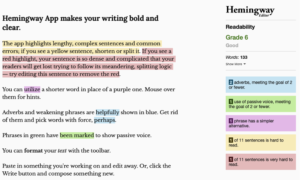
Hemingway uses AI to make recommendations on the tone and wording of your copy. (Image source: https://hemingwayapp.com)
Identifying user intent and personas
As data and analytics have become more prevalent, the ways in which we can segment target audiences has become more varied. But as search evolves, it’s being able to target the right user intent that is now widely considered the key to a good SEO strategy. Now, thanks to the tools mentioned above, as well as Google’s natural language processing API, companies can better understand user intent and personas.
The way to do this is assess the SERP and do an intent analysis. When you have target queries, enter them into Google and see what results are ranking at the top of page one. By putting your top keywords through this process of checking and identifying the search intent, you will be able to omit the ones that are irrelevant (for example a transactional intent keyword for an informational blog post or an informational intent keyword for a product page). Using Google’s own machine learning for intent will enable you to target your content correctly and reach the right audience with the right keywords.
So the future looks bright for AI and SEO. If you’d like to work with one of our specialists to discuss how we could help you automate some of your SEO work, reach out to us via the contact us page.
Struggling to Get Your Site Ranking? Get in Touch. Need Help Boosting Your Authority? Read on...